

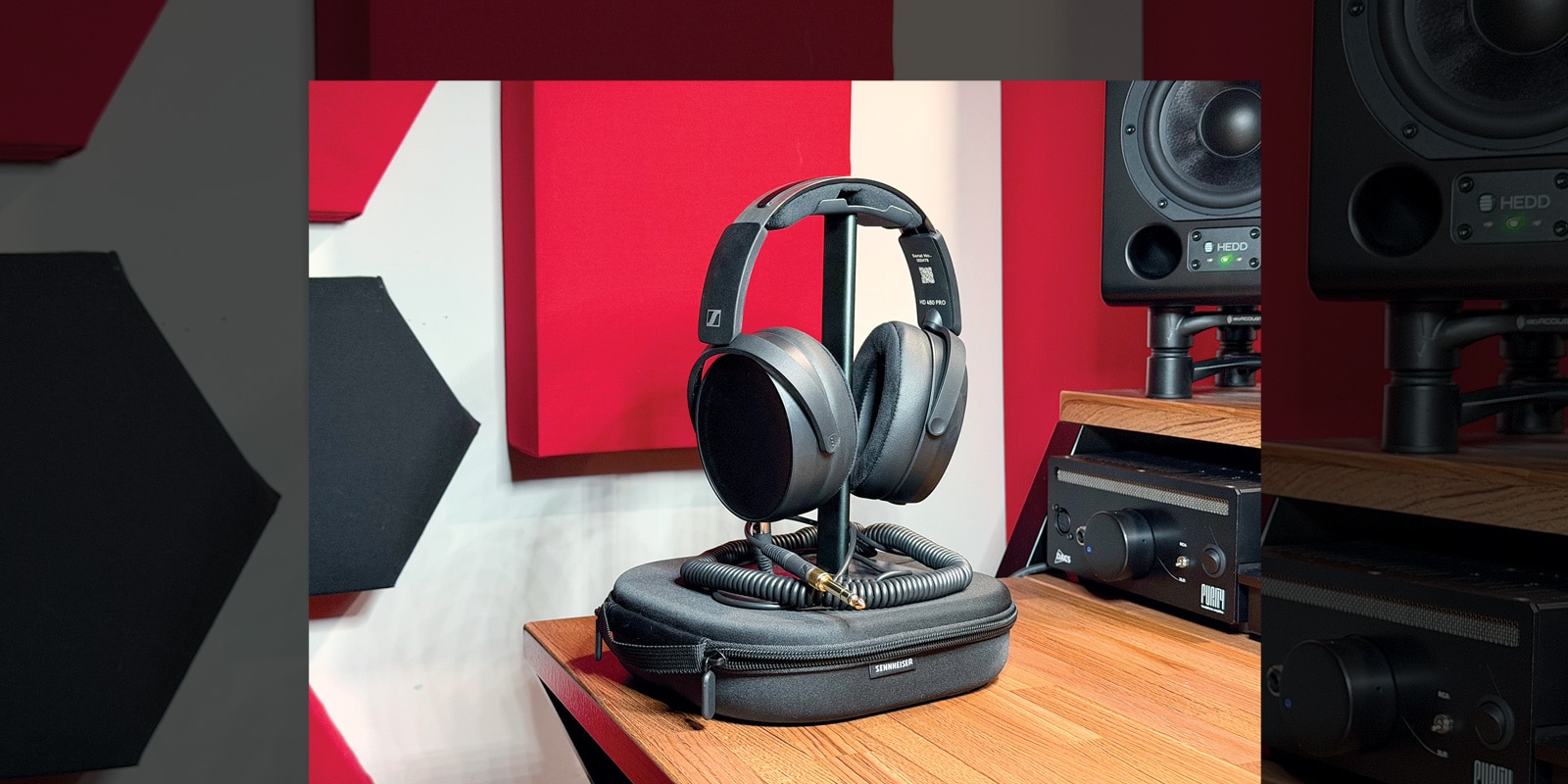

Balanced, natural and easy to trust
Review By Paul Vnuk Jr.
Just over two years ago, in our April 2024 issue, we took a look at the studio-focused Sennheiser HD 490 PRO open-back headphones, where author Bill Stunt called them “…that handy of a mixing tool and equally pleasant to just listen to.” Today, we turn our attention to that model’s brand-new closed-back sibling, the Sennheiser HD 480 PRO.
Past Featured Reviews
- October 2026: Chandler Limited REDD Mixing System
- September 2026: Barefoot Sound Footprint 01 Gen 02 and Footprint 02 Gen 02
- iamReverb
- August 2026: Focusrite ISA C8X
- July 2026: JZ Microphones MU-1
- Fender Quantum LT 16 USB-C Audio Interface
- LANDR: An all-in-one music ecosystem
- June 2026: Strymon NightSky Experimental Reverb Plugin
- May 2026: Sennheiser HD 480 PRO
Sennheiser HD History
As we learned in our 75 Years of Sennheiser (August 2020) and 80 Years of Sennheiser (January 2026) features, the company’s headphone story began with early designs in 1958. A decade later, in 1968, Sennheiser released the Sennheiser HD 414—the first open-air, lightweight, over-ear, nonbroadcast headphone and one of the first truly popular portable listening options.
In 1988, Sennheiser reshaped expectations again with the still-produced Sennheiser HD 25. Originally designed for both personal and professional use, it gained notoriety as an in-flight headset—most famously on the Concorde—and remains a go-to choice for DJs. We reviewed the Anniversary model in September 2020.
The most prestigious Sennheiser headphone creation was the Sennheiser Orpheus HE 90 system, released in 1991. This no-compromise, high-fidelity system paired the electrostatic HE 90 headphones with the companion HEV 90 amplifier. Only 300 systems were produced, originally selling for $13,000—roughly $30,000 today. The Orpheus directly influenced the company’s respected range of reference headphones, beginning with the Sennheiser HD 580 in 1993, which would branch into the popular HD 500, HD 600 and HD 800 lines. We reviewed the open-back Sennheiser HD 800 in March 2013, followed by its closed-back counterpart, the Sennheiser HD 820, in March 2019.
While many of these models became staples for engineers, they were originally designed for the high-end hi-fi market.
Arguably, the first truly studio-focused offering in this lineage was the ultra-affordable Sennheiser HD 400 PRO (reviewed in March 2022), though it still followed the established HD 500/600/800 design paradigm.
The Sennheiser HD 490 PRO, however—both visually and sonically—ushered in a new, purpose-built, studio-focused series designed to sit alongside the company’s respected hi-fi/audiophile offerings.
That same design approach carries directly into the closed-back Sennheiser HD 480 PRO. In general, both models share the same assembly, look, design and accessory options.
Meet the HD 480 PRO
The Sennheiser HD 480 PRO is a closed-back, circumaural (around-the-ear) studio headphone. Like the HD 490 PRO, it is built around a 38 mm dynamic driver featuring a state-of-the-art neodymium magnet design, coupled with a low-frequency chamber engineered to deliver a highly accurate bass response.
Also like the open-back model, the HD 480 PRO has a generous 130 Ω (1 kHz) impedance, making it well suited for use with everything from headphone outputs on smartphones, laptops and most consumer devices to professional audio interfaces, mixing desks and dedicated headphone amplifiers.
Specs and Numbers
Like the previous model, the Sennheiser HD 480 PRO boasts some impressive specs, many of which, as Bill Stunt pointed out in his review of the Sennheiser HD 490 PRO, show that these headphones “are capable of highs beyond the range of most hearing and impressive bottom end.” That said, the move from the open-frame architecture of the open-back model to a closed-back design does result in some subtle changes.
The HD 480 PRO offers a 3 Hz to 28,700 Hz (-10dB) transmission range, compared to 5 Hz to 36,100 Hz (-10dB) for the open-back model. Sensitivity is rated at 107dB SPL (1 kHz/1 Vrms) / 98dB SPL (1 kHz/1 mW), compared to the slightly less sensitive HD 490 PRO at 105dB SPL (1 kHz/1 Vrms) / 96dB SPL (1 kHz/1 mW). The HD 480 PRO also delivers a maximum SPL of 130dB SPL (1 kHz, 5% THD), compared to 128dB SPL (1 kHz, 5% THD).
Overall, the differences in this “number salad” are subtle, yet still meaningful. The most notable takeaway is that the HD 480 PRO trades a bit of ultra-high extension for slightly deeper low-end reach.
One final spec worth noting is weight: the new headphones come in at 272 g (0.60 lb), compared to 260 g (0.57 lb) for the older model. Both are essentially feather-light, though you can feel a slight increase from the solid aluminum earcups on the HD 480 PRO.
Fit, Finish and Feel
Both models make use of the same lightweight, yet solid armature, with a removable, washable and replaceable super-soft foam and velour head cushion. The height adjustments are easy to slide, yet remain firm once set.
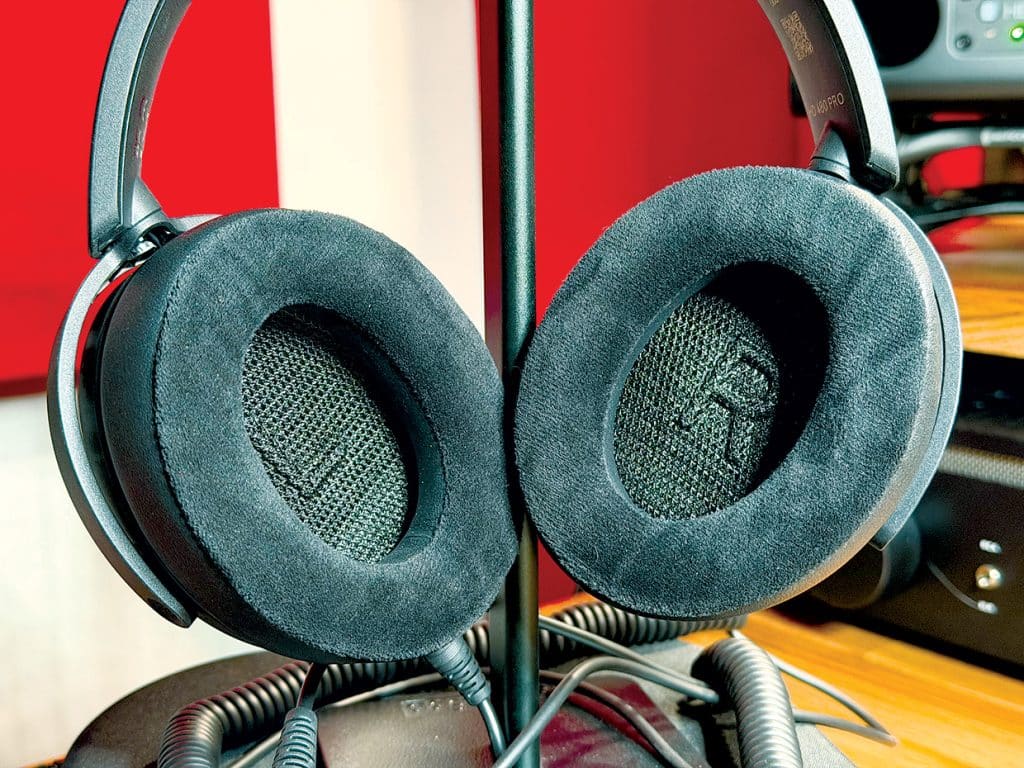
The earcup design and angles remain unchanged, and according to Sennheiser, “the transducer position has been optimized in two axes, which gives you the transparency, wide soundstage and localization that you need for high-quality productions and accuracy when monitoring.” The earcups sit in 180o swivel yokes, and like the previous model, the inside of each cup is embossed with L/R markers, with a braille marker on the left cup yoke.
Comforting Cups and Extra Touches
Moving to the earpads, the Sennheiser HD 490 PRO offered a choice of thick, soft velour “producer” pads and slightly thinner denim “mixing” pads—each noticeably altering the sonic focus for different tasks. By contrast, the Sennheiser HD 480 PRO features a single earpad design with leatherette sides and a velour top, optimized for isolation.
Like the previous model, the earcups are super comfortable—I mean, really comfortable—and include a small, barely perceptible cutout to accommodate the arms of those of us who wear glasses.
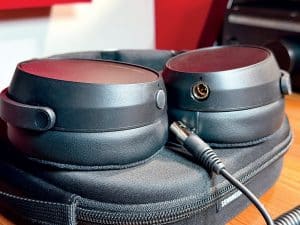
Each cup is once again equipped with a mini XLR socket, allowing you to choose whether to attach the cable to the left or right side.
Cable Matters and Package Options
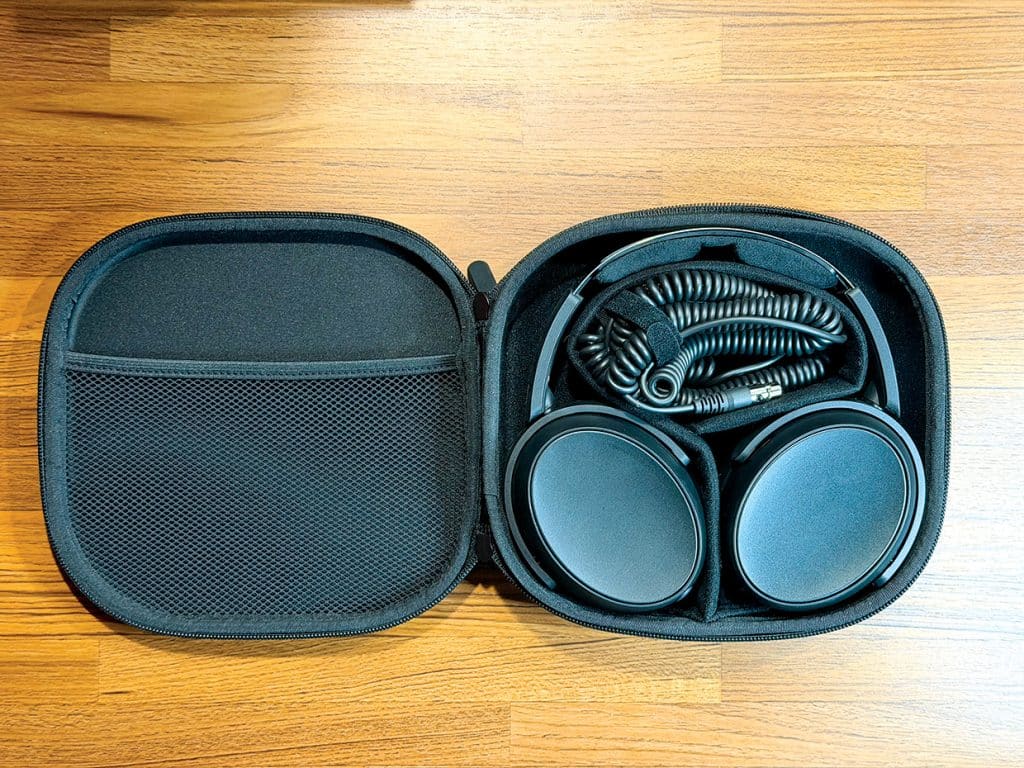
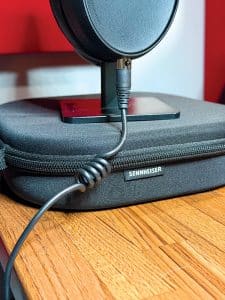
Finally, the Sennheiser HD 480 PRO is available in one of two packages. The standard version ships in a simple cardboard box with a single 3 m coiled cable and a cloth headphone bag, while the PRO PLUS version adds a thick, protective, hard-sided zippered case.
About an inch below the snap-in XLR connector on the headphone cable is a small five-ring coil designed to minimize the transmission of cable-borne noise.
On Ear
On the ear, the first thing you will notice is—just as mentioned earlier—how stunningly light and comfortable the Sennheiser HD 480 PRO headphones are. These are the kind of cans that are easy to wear for hours at a time, with next to no clamping pressure, jaw pain or neck fatigue due to weight.
They also grip well enough that even drummers should have little worry of their headphones taking flight during a spirited take—and, so far, all of the above equally applies to the Sennheiser HD 490 PRO.
Isolation
Beyond comfort, the earcup design of the Sennheiser HD 480 PRO delivers excellent isolation. Using a level meter, I set playback to 82dB in the headphones off my ears with some cranked Metallica. Placing the headphones on my ears dropped the measured level to 47dB—essentially the ambient noise floor of my office.
In a quick recording test with a Shure SM7B, there was only the faintest hint of musical bleed—and only when I pushed my headphone-covered ears right up to the mic grille. I also ran a few click-bleed tests, and the Sennheiser HD 480 PRO performed equally well, with next to no perceptible click track leakage into the microphone. All told, this makes the HD 480 PRO an excellent choice for tracking situations, offering impressive isolation both in and out.
Sound
When it comes to sound, there are clear familial similarities between the closed- and open-back offerings. Somewhat surprisingly, while the Sennheiser HD 480 PRO delivers a more solid low end, this is most apparent when comparing it to the Sennheiser HD 490 PRO with the mixing pads. That said, I still found the HD 490 PRO with the producer pads exhibited just a touch more sub-low weight, although not as tight.
The high end—especially in the hi-hat range—is also similar between the two models, though the HD 480 PRO lacks a bit of that dimensional “air,” perhaps for obvious reasons.
To get my bearings, I spent time comparing the HD 480 PRO to five other popular closed-back headphones. While some were brighter, some had more forward presence and others had a more hyped low end, what stood out was that the HD 480 PRO presented the most natural soundstage of the group without sacrificing low-end extension.
If you prefer your closed-back headphones to sound forward, punchy, and “kicking,” or lean toward the more home hi-fi presentation of the HD 500 through 800 series, these are not necessarily that. Instead, the descriptors I keep landing on are full and natural, with a pleasing sense of dimensional width, a deep-reaching yet balanced low end and a fast, accurate top-end transient response that keeps things clear and detailed without ever becoming harsh, tizzy or distorted.
Just as with their physical comfort, the HD 480 PRO offers a high degree of aural comfort, making them ideal for extended tracking and mixing sessions—where, once again, it’s easy to forget they are there.
Wrap Up
I am genuinely impressed by how balanced the Sennheiser HD 480 PRO sounds—whether tracking, mixing or even just listening to music, which is not something I often do with closed-back headphones unless I am on a flight.
Bottom line, these are not hype machines—they are work tools. Balanced, natural and easy to trust, they invite long sessions without fatigue and translate in a way that inspires confidence. Well-built and exceptionally comfortable, the HD 480 PRO is a no-nonsense studio companion that gets out of the way and lets you focus on the music.
Price: $399 HD 480 PRO; $439 HD 480 PRO PLUS
More From: sennheiser.com/en-us